|
CCD specifications
Camera
specifications
Softwares
specifications
Minimum & normal configuration
Gallery
|
|
image Logitech |
Images up to 640x480 pixels 8 bits/color output, internally 30 bits (also 320x240, 160x120 & 80x60)
Message from :
With its large CCD size (about5mm diagonal), high resolution (640x480) and true color (30 bits)it is probably the best of the Quickcams for bright and largeobjects like the Sun (eclipses, sun spots & H alpha), theMoon, Venus & Mars. It is also very nice to use foroccultations by the Moon and during daytime. For Jupiter andespecially Saturn, a large aperture telescope (over 250mm) isneeded to compensate some lack in sensitivity when compared withthe QuickCam VC. Darkframes are reliable.
The possibility to capturelarge (+300mo) .avi files with high image rate permits forexample later selection of the cleanest images with aviedit fromAlexander Milukov, combining with MaximDL and processingwith PAP98.
Adaptation to any telescopeor photographic objectives is standard as for the other QuickCamsand is treated elsewhere.
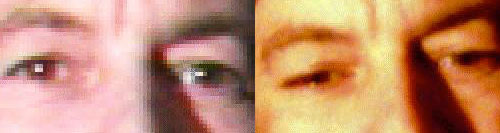
| Comparing resolution between the Qcam VC (left) & Qcam pro (right) | ||
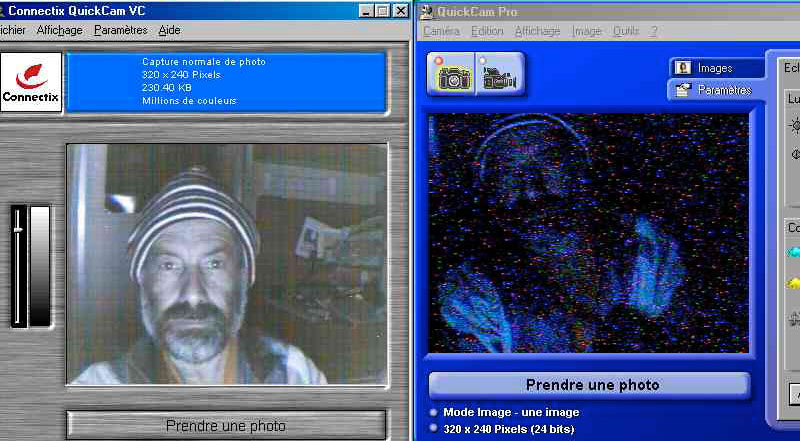
| Comparing sensitivity between the Qcam VC (left) & Qcam pro (right) | ||
|
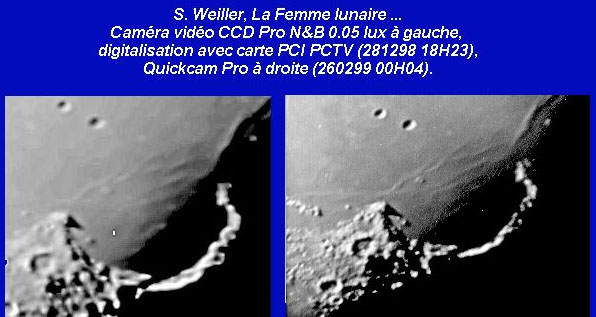
Comparing quality between a video surveillance camera with PC acquisition board (left)
& Qcam pro (right) |
||
|
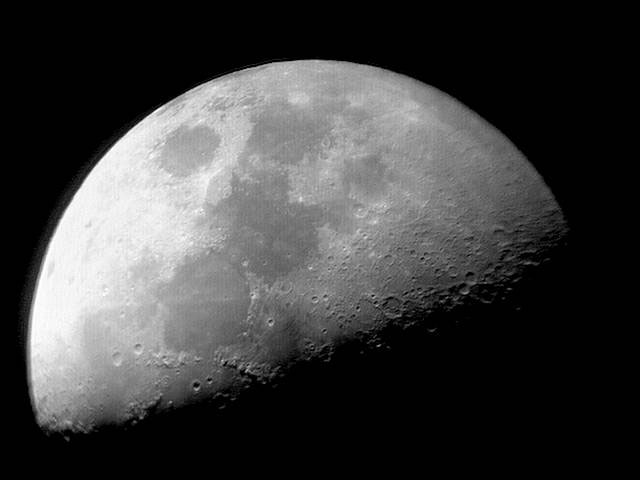
C8 at F10 + 26mm Plossl eyepiece
Quickcam Pro with its original lens placed behind (parfocal) Automatic settings - Conversion 256 grey levels - saving JPG (comp x30) |
||
|
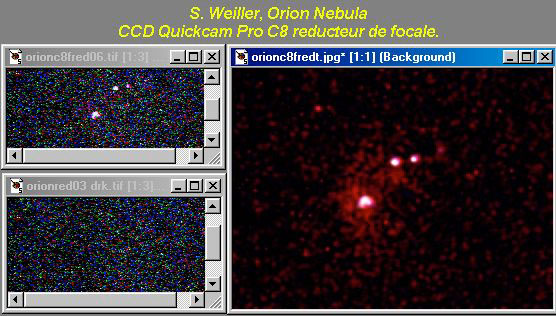
Orion Nebula. C8 + focale reducer
Modified Quickcam pro as described elsewhere (see adaptation ) |
||
|
Saturn. C8 + 3x Barlow 3x
Modified Quickcam pro as described elsewhere (see adaptation ) |
||
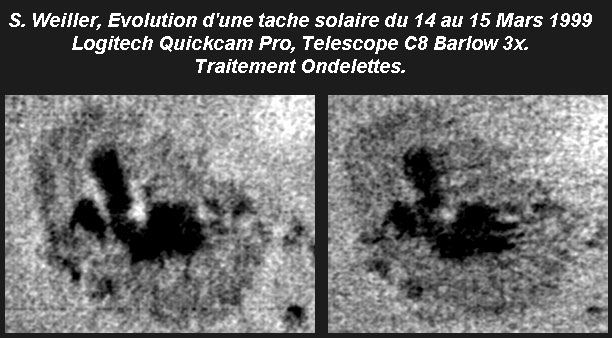
| Sun spots. C8 at F10. Images selected from AVI. Green image. | ||
| Fluorite Perl Vixen 102/900 + Barlow 3x | ||
|
Method for pen and paper drawing of difficult to image sun spot groups :
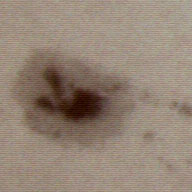
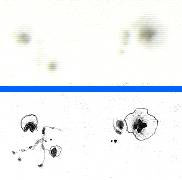
1) If the group is small use the QCPro at focal point of C8. If it is very large use a focal reducer. For good results, only a full aperture filter with 1/10000 bandpass should be used. 2) Two images with RA motor stopped are taken : one with spots on the left then later one with the same spots now on the right. This gives by comparaison the East-West direction and permits later orientation of the drawing. A small .avi is captured. A good image is selected (see lower left) and processed as follows : histogram equalisation, light, gamma & contrast ajustement. Then it is resized to full page with PSP and printed in grey scale. 3) Sun spots with penombra are placed correctly but look out of focus (see upper left) 4) Now start visual observation with a 26mm eyepiece 5) Draw on top of the slightly printed page with a soft pen using the best camera : your eye ! High solar resolution is easy now without the fear to do a drawing out of proportions ! You should obtain something like what is shown to the right ! All the cameras are beaten ! |
||
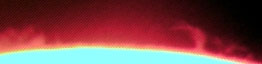
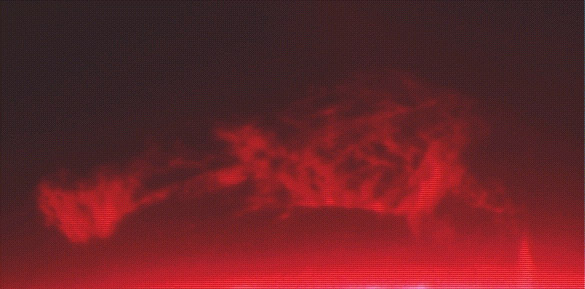
| Sun in Halpha. C8 at F10 with lumicon Prominence filter | ||
| Sun in Halpha. C8 at F10 with lumicon Prominence filter | ||
|
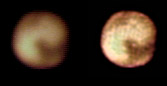
Mars. C8 with long anti dew camping matress tube
Eyepiece projection with Plossl 26mm eyepiece (Focal lenght 10m) QCam Pro USB with 1"1/4 adaptation, no IR blocking filter, binning 2x, size 320x240 pixels, output .AVI. Manual settings for best fluidity and luminosity. |
||
|
Mars. C8 with long anti dew camping matress tube
Eyepiece projection with Plossl 26mm eyepiece (Focal lenght 10m) QCam Pro USB with 1"1/4 adaptation, no IR blocking filter, binning 2x, size 320x240 pixels, output .AVI. Manual settings for best fluidity and luminosity. |
||
|
Mars. C8 with long anti dew camping matress tube
Eyepiece projection with Plossl 26mm eyepiece (Focal lenght 10m) QCam Pro USB with 1"1/4 adaptation, no IR blocking filter, binning 2x, size 320x240 pixels, output .AVI. Manual settings for best fluidity and luminosity. |
||
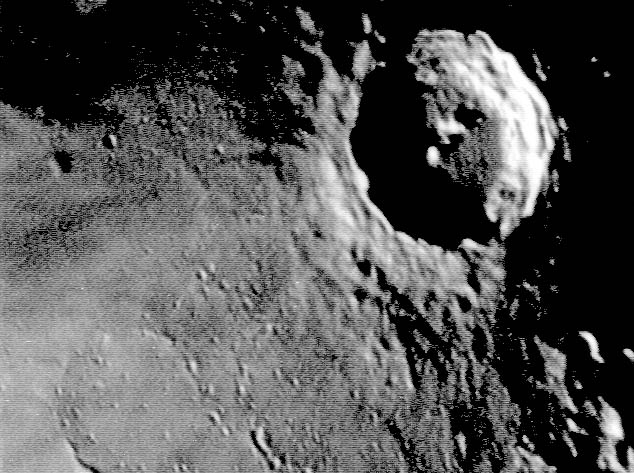
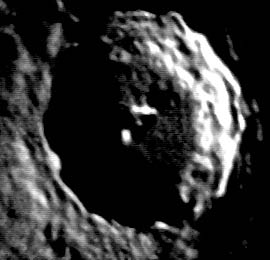
| Copernic. C8 + 3x Barlow. Images selected from .AVI. | ||
| Copernic. C8 + 3x Barlow. Images selected from .AVI. | ||
| Triesnecker. C8 + Barlow 3X. Images selected from .AVI. | ||
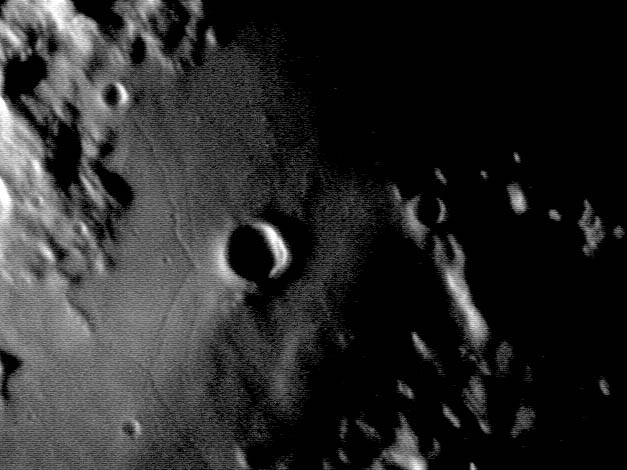
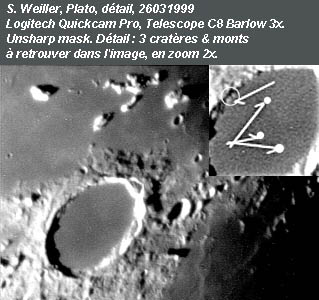
| Platon. C8 + Barlow 3X. Images selected from .AVI. | ||
| Image from .AVI. The famous TCC craters, Combined from 4 selected images selectionnées, C8 at F10 + QC Pro, wavelet with PAP98 (5,2,1,1,1) | ||
| Moon mosaic with exceptionnal libration of 8.4° NW . C8 at F10 + Qcam pro | ||
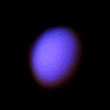
| Venus. C8 + 3X Barlow and QC Pro . 34A violet filter | ||
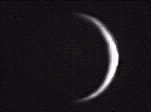
| Vénus. C8 | ||
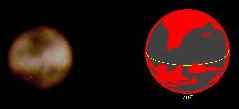
| Vénus. C8 + Barlow 3x . At right combinaison with Redshift image for proof | ||
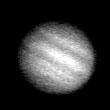
| Jupiter during day time ! C8 + 3x Barlow. 6 images combined with PAP98. Unsharp mask. |